
Balancing Vata
Home / Balancing Vata
Balancing Vata Dosha: The Key to Harmony and Stability
In Ayurveda, the Vata dosha is associated with the elements of air (Vayu) and ether (Akasha). It governs movement, communication, creativity, and flexibility in both the mind and body. When Vata is balanced, you feel energetic, clear-headed, and full of vitality. However, an imbalanced Vata can lead to issues such as anxiety, insomnia, dry skin, digestive problems, and restlessness.
Balancing Vata requires grounding, warmth, and routine. Here’s how you can restore harmony to this dynamic dosha:
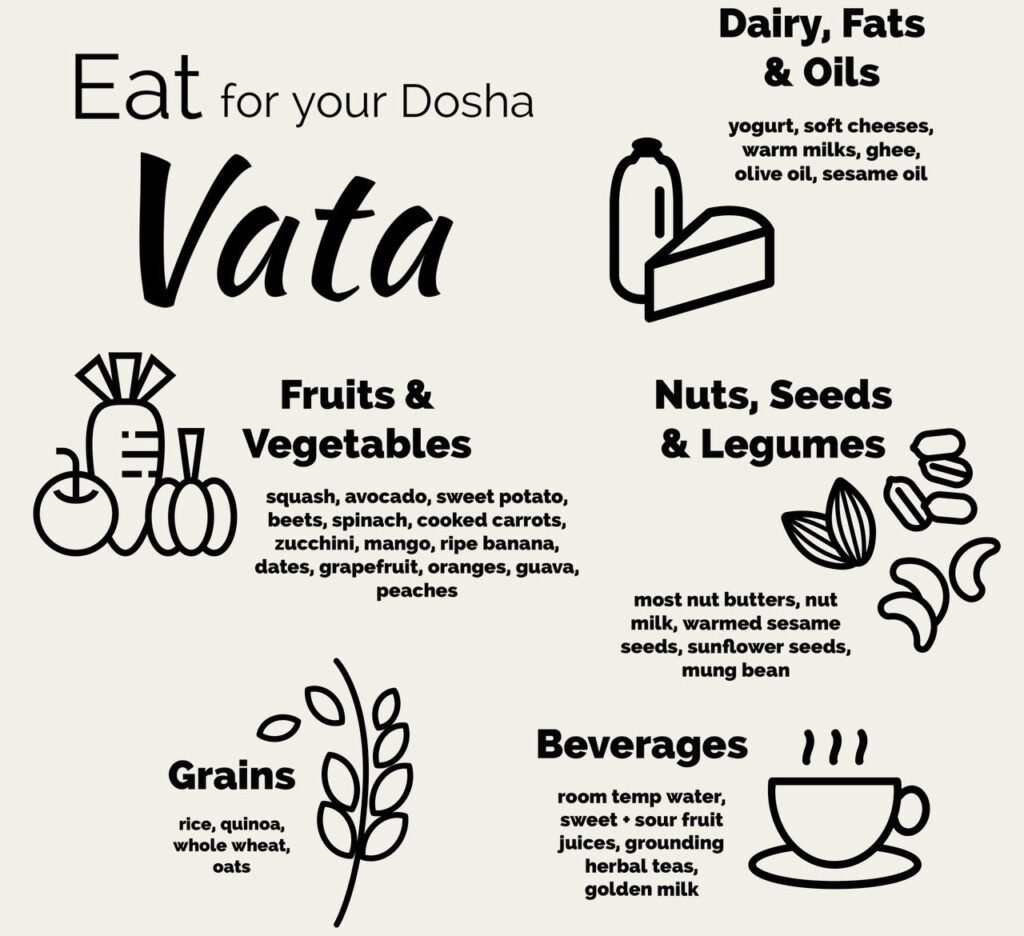
Follow a Vata-Pacifying Diet
Since Vata is dry, cold, and light in nature, it’s essential to incorporate foods that are warm, moist, and nourishing:
- 1. Include: Warm, cooked meals such as soups, stews, and porridges. Favor sweet, sour, and salty tastes.
- 2. Avoid: Cold, raw, or dry foods like salads, crackers, or frozen items. Minimize bitter, astringent, and pungent tastes.
- 3. Healthy Fats: Ghee, olive oil, and sesame oil help counter Vata’s dryness.
- 4. Spices: Warming spices like ginger, cinnamon, cumin, and turmeric enhance digestion and provide balance.
2. Maintain a Consistent Routine
Vata thrives on regularity and stability. Erratic schedules or irregular habits can easily throw it off balance.
- 1. Sleep and Wake Time: Go to bed and wake up at the same time daily, preferably before 10 PM and around 6 AM.
- 2. Mealtimes: Eat meals at consistent times each day to regulate digestion.
- 3. Daily Self-Care: Incorporate Ayurvedic practices like tongue scraping, oil pulling, and a gentle morning routine.
3. Embrace Grounding Practices
To counter Vata’s restless nature, prioritize grounding activities:
- 1. Yoga and Meditation: Gentle yoga poses like Child’s Pose, Forward Fold, and Tree Pose are excellent. Meditation helps calm the mind.
- 2. Breathing Exercises (Pranayama): Practices like Nadi Shodhana (alternate nostril breathing) or deep belly breathing help stabilize Vata.
4. Prioritize Warmth and Moisture
Vata tends to get aggravated in cold and dry environments:
- 1. Clothing: Dress warmly, especially in cooler weather. Layering soft, cozy fabrics can help.
- 2. Warm Showers and Oil Massage: Abhyanga (self-massage with warm sesame oil) nourishes the skin, promotes relaxation, and balances dryness.
5. Stay Hydrated
Drink warm or room-temperature water throughout the day. Herbal teas like ginger, tulsi, or chamomile are soothing for Vata. Avoid icy or carbonated drinks.
6. Reduce Overstimulation
Vata types are prone to overstimulation due to their active minds. Reduce external stimuli by:
- 1. Limiting screen time, especially before bed.
- 2. Spending time in nature, walking barefoot on grass or sand.
- 3. Engaging in calming hobbies like reading, gardening, or journaling.
7. Herbal Support
Ayurveda recommends certain herbs to calm and balance Vata:
- 1. Ashwagandha: Helps reduce stress and promote restful sleep.
- 2. Triphala: Supports digestion and elimination.
- 3. Shatavari: Nourishes and grounds the body.
Always consult an Ayurvedic practitioner before incorporating herbs into your routine.
8. Avoid Overexertion
Vata imbalances often lead to exhaustion, so avoid overworking or multitasking. Take regular breaks, prioritize rest, and allow yourself time to recharge.